|
| ||||||||
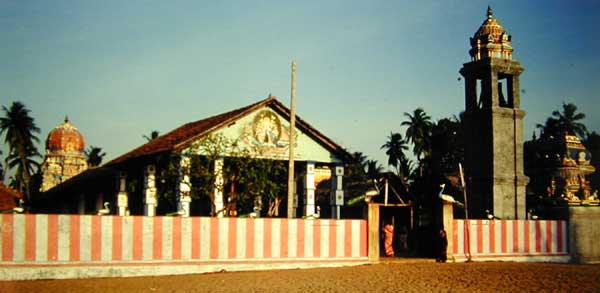 Tirukkovil Citra Velayudha Swami KovilTirukkōvil Citira Velāyuta Cuvāmi Kōvil is situated on the Eastern coast about sixty kilometres south of Batticaloa. It has a very ancient past and is categorised as the first Tiruppatai Kōvil. The temple is located very close to the sea, where a port may have once existed, which was referred to as Kantapānan Turai. Tirukkōvil on the eastern coast is an important resting point for foot pilgrims on their way to Katirkāmam for the annual festival.
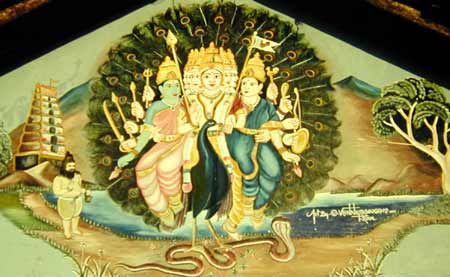
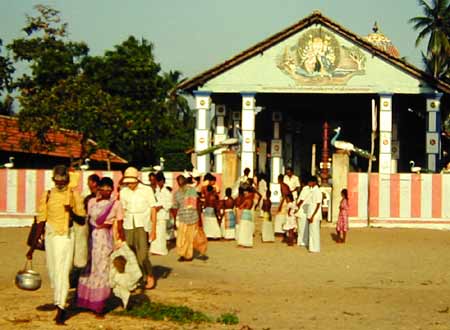
The carefully preserved vimānam of this ancient temple is present to this day. Archaeologists have identified it as of Pandyan architecture of the 13th century. This shrine is also of Vedda origin where the Vel becomes a symbol or emblem of worship. Mythology attributes sanctity to this place as the spot where Ravana did his Siva puja. It is also as one of the places identified by Veddas where the splintering rays which originated from Vel of Murukan fell when it confronted the Vahura hill. Consent for holding Kanta Puranam recitals was given by the Dutch Government in 1807 A.D. and a mudaliyar erected the present temple, dedicating it to Kantan Katirai-Āntavan. Its location is at this Kantapananturai, (the port of Skanda's arrow). In recent times, several additions and improvements have been made. The Vel remains installed as the mûlamûrti to this day. Rev. Queroz, a historian and Portuguese priest, describes the temple structure as having had three gopurams at the time of destruction by the Portuguese. Sometime in the later Dutch or early British period when there was a general renaissance of Hinduism in the island, merchants from India erected the temple at that site. Reference to Vedda chieftain Pulian associated with Tirukkovil is found in Tirukkovil temple manager (Taprobanion Nadu Kadu record. p. 127) According to one myth, King Rāvana is said to have worshipped here on his way to Kōneswaram in Trincomalee and it was he who originally erected a Civan temple at this site. The Veddas venerated this place as the site where one of the rays which emanated at Vākura hill sheltered. Later the Murukan temple was constructed at this site. History relates the origin of the temple to Cholan and Pandyan rulers. Temple Structure Administration Worship patterns The old lady was very hurt and stood in front of the sanctum sanctorum for hours asking for redress. Murukan, moved by her devotion, transformed her into a young girl. The management, deeply moved by her piety, reinstated her as the Ārati Pen. Even now, devotees come to this temple when they are in difficulties, particularly due to military operations in the area. They feel that it is only God who can give protection. Information on this page is taken from
|

| Living Heritage Trust ©2021 All Rights Reserved |